How to Accept Crypto Payments for Digital Products
Learn how to accept crypto payments for digital products, including checkout setup, supported currencies, payment confirmation, automatic delivery, refunds, and customer support.
How to Accept Crypto Payments for Digital Products
Accepting crypto payments can be a simple way to sell digital products to customers around the world. Instead of relying on traditional payment methods, customers can pay with supported cryptocurrencies directly from their wallet.
Crypto payments work especially well for digital products because delivery can be automated. Once a payment is detected and confirmed, the customer can instantly receive a download link, license key, subscription access, private resource, or other digital content.
This guide explains how to accept crypto payments for digital products, how the checkout flow works, and what sellers should prepare before launching.
What Are Crypto Payments?
Crypto payments are payments made with cryptocurrency instead of credit cards, bank transfers, or other traditional methods. Customers use a crypto wallet to send the required amount to a payment address or scan a QR code during checkout.
Once the blockchain transaction is confirmed, the seller can process the order. For digital products, this process can be automated so the customer receives access without waiting for manual approval.
What Digital Products Can You Sell With Crypto?
Crypto payments can be used for many different digital products and online services, including:
- Software licenses
- License keys
- Digital downloads
- E-books and guides
- Templates and design assets
- Subscription access
- Memberships
- Private communities
- Online tools and SaaS products
- Digital services
- Access passes and private resources
Why Accept Crypto Payments?
Many sellers choose crypto payments because they want to serve a global audience and offer a payment option for customers who already use cryptocurrency.
Crypto payments can also work well with automated digital delivery. A customer completes payment, the transaction is confirmed, and the product is delivered automatically.
For digital sellers, this can create a fast and simple sales process without manual payment checks after every order.
Step 1: Choose a Crypto Payment Platform
The first step is choosing a platform that lets you create products, accept crypto payments, track transactions, and automate delivery.
A good crypto payment platform should help you:
- Create product pages
- Set prices for digital products
- Display supported cryptocurrencies
- Generate payment addresses or QR codes
- Detect and confirm payments
- Automatically deliver products after confirmation
- Track orders and customer information
- Manage refunds and support requests
Before launching, test the payment flow yourself to make sure customers can complete checkout without confusion.
Step 2: Choose Which Cryptocurrencies to Accept
Sellers should choose supported cryptocurrencies based on what their customers are likely to use. Common options may include Bitcoin, Ethereum, USDT, Litecoin, and other supported assets.
Offering several options can make checkout more flexible, but do not add currencies only for the sake of having a long list. Focus on the cryptocurrencies your target audience actually prefers.
Your checkout page should clearly show:
- The selected cryptocurrency
- The exact amount to send
- The receiving address
- A QR code for wallet scanning
- The current payment status
- Any payment time limit, if applicable
Step 3: Create a Clear Product Page
Before customers pay, they should understand exactly what they are buying. A strong product page reduces confusion, support requests, and refund disputes.
Your product page should include:
- A clear product title
- A simple description of what the customer receives
- The product price
- Supported crypto payment options
- Delivery details
- Compatibility requirements, if relevant
- Support contact information
- Refund or replacement policy
Avoid vague language. Explain whether the buyer receives a file, key, account access, subscription, private link, digital service, or another type of product.
Step 4: Set Up Crypto Checkout
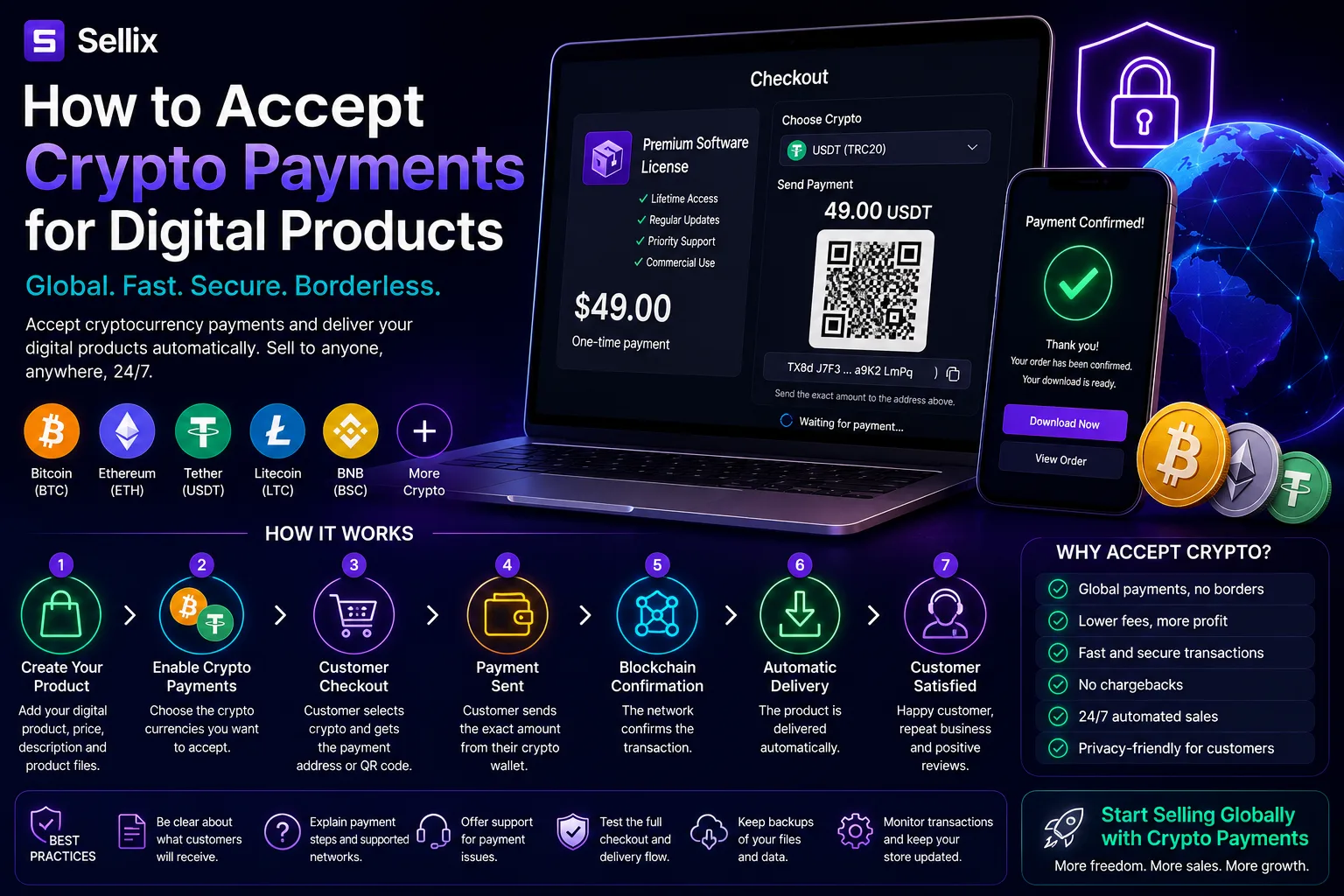
During crypto checkout, the customer selects a cryptocurrency and receives payment instructions. Depending on the platform, this may include a wallet address, QR code, timer, order reference, and real-time transaction status.
The checkout process should be as simple as possible:
- The customer selects a product.
- The customer chooses a supported cryptocurrency.
- The checkout displays the exact amount and payment address.
- The customer sends payment from their wallet.
- The platform detects the transaction.
- The blockchain confirms the payment.
- The product is delivered automatically.
A clear checkout experience is important because new crypto users may not be familiar with payment addresses, network selection, or transaction confirmations.
Step 5: Automate Digital Product Delivery
Automatic delivery is one of the biggest benefits of accepting crypto payments for digital products. Instead of manually sending products after every order, the platform can fulfil the purchase after payment confirmation.
Automatic delivery can include:
- Download links
- License keys
- Activation codes
- Private access links
- Membership activation
- Subscription access
- Account credentials
- Instructions sent by email
This saves time, improves customer experience, and allows your store to process sales even when you are offline.
Step 6: Explain Payment Confirmation Times
Crypto payments are not always confirmed instantly. Confirmation times can vary depending on the cryptocurrency, blockchain network activity, wallet settings, and transaction fee used by the customer.
Your checkout should clearly explain that the order is completed after the payment is confirmed. This helps prevent customers from thinking something is wrong when a transaction takes longer than expected.
You can reduce confusion by showing payment statuses such as:
- Waiting for payment
- Payment detected
- Confirming transaction
- Payment confirmed
- Order delivered
Step 7: Create a Clear Refund Policy
Refunds can be more complicated with crypto payments because cryptocurrency transactions are generally irreversible once sent. That does not mean sellers should avoid refunds, but it means your policy should be clear before customers complete checkout.
Your refund policy should explain:
- Which products are eligible for refunds
- Whether digital downloads are refundable after access is granted
- How customers can request support
- How refund amounts are calculated
- Which cryptocurrency or value is used for refunds
- How long refund reviews may take
A fair and visible policy helps reduce disputes and makes your store look more trustworthy.
Step 8: Provide Customer Support
Even with automatic delivery, customers may need help with payments, network selection, incorrect transfers, delayed confirmations, downloads, license keys, or account access.
Make it easy for customers to contact you by providing:
- A support email
- A ticket system
- A help center or FAQ page
- Clear instructions for common payment issues
- Order lookup tools where available
Fast and helpful support can turn a confusing payment issue into a positive customer experience.
Common Mistakes to Avoid
When accepting crypto payments, avoid these common mistakes:
- Using unclear product descriptions
- Failing to explain what happens after payment
- Not showing which network customers should use
- Manually delivering every order when automation is available
- Providing no support contact information
- Using a confusing or cluttered checkout page
- Not testing the purchase flow before launch
- Failing to keep order and product backups
Best Practices for Selling Digital Products With Crypto
The best crypto payment setup is simple, transparent, and reliable. Customers should understand what they are buying, how to pay, and when they will receive their product.
Keep your store professional by using clear product pages, accurate prices, simple checkout instructions, automatic delivery, visible support details, and a fair refund policy.
It is also important to keep backups of your product files, license keys, customer communication, and order records. Your business should not depend entirely on a single platform or payment system.
Final Thoughts
Accepting crypto payments for digital products can help sellers reach global customers, automate delivery, and create a flexible checkout experience for crypto users.
The process is simple when your platform handles payment detection, transaction confirmation, order tracking, and automatic delivery. Focus on making checkout clear, supporting customers when needed, and delivering exactly what buyers expect.
With the right setup, crypto payments can become a reliable way to sell software, files, subscriptions, templates, memberships, and other digital products online.