10 Best-Selling Digital Product Ideas for 2026
Discover 10 digital product ideas to sell in 2026, from templates and online courses to software tools, memberships, AI resources, and premium digital downloads. Learn what makes each product type valuable and how to choose the right idea for your audience.
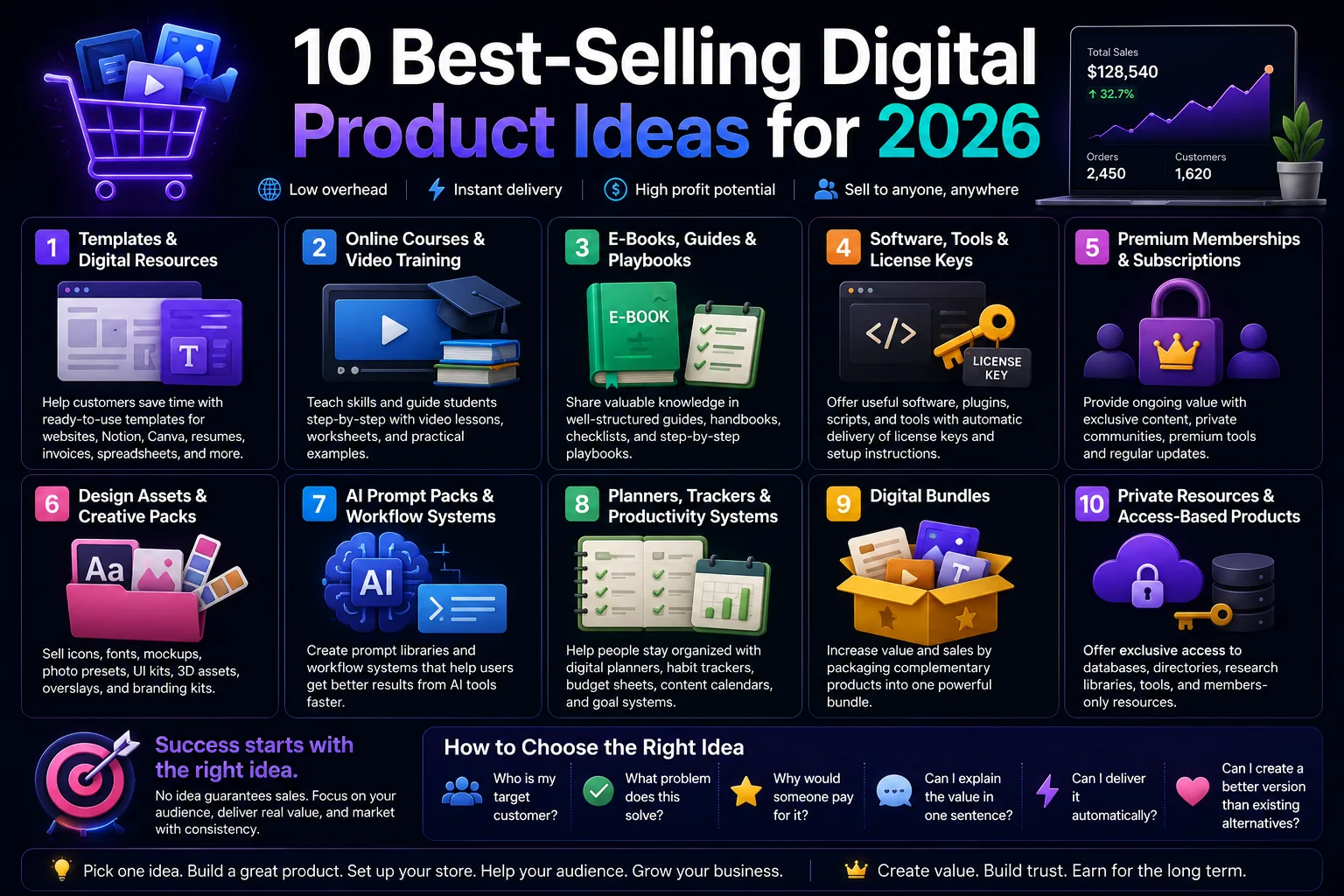
10 Best-Selling Digital Product Ideas for 2026
Digital products remain one of the most flexible ways to build an online business. Unlike physical products, they do not require inventory, shipping, or warehouses. A seller can create a useful product once, deliver it online, and sell it to customers around the world.
However, no digital product is guaranteed to sell. The best-performing products usually solve a clear problem, save customers time, provide access to something valuable, or help people achieve a result faster.
This guide covers 10 digital product ideas that can work well in 2026, including templates, software, subscriptions, courses, digital assets, AI resources, and premium downloads.
1. Templates and Ready-to-Use Digital Resources
Templates are one of the easiest digital products to understand and sell. They help customers avoid starting from zero by giving them a ready-made structure they can customize.
Popular template ideas include:
- Website templates
- Notion templates
- Canva templates
- Social media post packs
- Invoice and proposal templates
- Business spreadsheets
- Resume and portfolio templates
- Presentation templates
Templates work best when they solve a specific problem for a specific audience. A template for freelancers, content creators, small businesses, students, or agencies is usually easier to market than a generic template with no clear use case.
2. Online Courses and Video Training
Online courses can be valuable because they help customers learn a skill, complete a task, or improve their results. A course does not need to cover everything. Short, focused training can often be more useful than a large course with too much information.
Course topics can include:
- Design and creative tools
- Programming and software skills
- Marketing and content creation
- Business systems
- Fitness and personal development
- Language learning
- Crypto and blockchain education
- Professional or technical skills
The strongest courses usually have a clear outcome. Instead of creating a broad course about business, create a focused course that helps a specific person achieve one useful result.
3. E-Books, Guides, and Playbooks
E-books and digital guides can be a simple way to package useful knowledge. They work well when the content is organized, practical, and easier to use than free information scattered across the internet.
Strong guide ideas include:
- Step-by-step business guides
- Industry-specific checklists
- Beginner handbooks
- Productivity systems
- Travel and local resource guides
- Technical documentation
- Freelancer pricing guides
- Marketing playbooks
A useful digital guide should be specific. A guide called “How to Start Freelancing as a Video Editor” is more useful than a broad guide called “How to Make Money Online.”
4. Software, Tools, and License Keys
Software products can be highly valuable because they help customers automate work, save time, or gain access to useful functionality.
Examples include:
- Desktop software
- Browser extensions
- Plugins
- Scripts and automation tools
- API tools
- Small SaaS products
- Developer tools
- License-based utilities
Sellers can use automatic delivery to send license keys, setup instructions, download links, or account access after a successful payment.
5. Premium Memberships and Subscriptions
Memberships work well when customers receive ongoing value. This may include new content, software access, private resources, regular updates, a community, or premium tools.
Membership ideas include:
- Private communities
- Premium newsletters
- Monthly resource libraries
- Software subscriptions
- Exclusive tutorials
- Research or market reports
- Members-only tools
- Recurring template packs
The key to a good subscription is consistency. Customers should understand what they receive every month and why it is worth continuing their subscription.
6. Design Assets and Creative Packs
Designers, creators, and marketers often need high-quality assets they can use in their own projects. This makes design packs a useful digital product category.
Examples include:
- Icons and UI kits
- Fonts
- Mockups
- Photo presets
- Video overlays
- Motion graphics
- 3D assets
- Branding kits
To make a design product more valuable, explain exactly what is included, which software supports the files, and whether customers can use the assets for personal or commercial projects.
7. AI Prompt Packs and Workflow Systems
AI tools are widely used for writing, research, design, coding, automation, and customer support. However, many users still need practical systems that help them get better results.
Digital product ideas in this category include:
- AI prompt packs for specific industries
- Content creation workflows
- Customer support prompt libraries
- Marketing prompt systems
- Research templates
- AI-powered spreadsheet systems
- Automation guides
- Business process templates
Generic prompt packs are easy to copy. The stronger product is usually a niche-specific workflow that helps a real customer save time or create better results.
8. Digital Planners, Trackers, and Productivity Systems
Digital planners and tracking tools can be useful for people who want to organize their work, finances, habits, health goals, content plans, or business tasks.
Product ideas include:
- Budget planners
- Habit trackers
- Fitness planners
- Content calendars
- Project management systems
- Student planners
- Meal planning resources
- Goal-setting dashboards
These products are easier to sell when they target a clear audience. For example, a creator content planner, a freelancer finance tracker, or a student exam planner can be more attractive than a general productivity file.
9. Digital Bundles
Bundles combine multiple related products into one offer. They can increase the perceived value of your store and encourage customers to spend more per order.
Examples include:
- A social media bundle with templates, captions, and content calendars
- A freelancer bundle with invoices, contracts, and proposal templates
- A design bundle with icons, mockups, and branding assets
- A creator bundle with guides, tools, and workflow templates
- A software bundle with multiple licenses or add-ons
The best bundles are connected by one clear use case. Avoid combining unrelated products just to make the bundle look larger.
10. Private Resources, Databases, and Access-Based Products
Some customers are willing to pay for organized access to useful information, tools, directories, or private resources.
Examples can include:
- Niche directories
- Job boards and opportunity databases
- Industry research libraries
- Private tool collections
- Premium resource hubs
- Exclusive templates and downloads
- Members-only communities
- Curated databases for a specific industry
Access-based products need to provide real value. Customers should understand why your collection, database, or resource hub is more useful than information they could find on their own.
How to Choose the Right Digital Product Idea
The best product idea depends on your skills, audience, and what you can maintain over time. Before launching, ask yourself:
- Who is my target customer?
- What problem does this product solve?
- Why would someone pay for it?
- Can I explain the value in one sentence?
- Can I deliver it automatically?
- Do I have the knowledge or resources to support it?
- Can I create a better version than existing alternatives?
Start with one focused offer. It is usually better to sell one useful product to a clear audience than to launch many random products with no strong message.
How to Sell Digital Products Successfully
A good product still needs a good selling system. Your store should clearly explain the product, show what customers receive, provide a simple checkout flow, and deliver products automatically after payment.
For crypto-first digital sellers, this can mean creating a product page, accepting crypto payments, confirming transactions, and automatically delivering files, license keys, or access details.
Build trust with clear policies, accurate product descriptions, support information, and a professional storefront. The easier it is for customers to understand what they are buying, the more likely they are to complete checkout.
Final Thoughts
The best-selling digital products are not always the most complex. They are products that solve a real problem, save time, make work easier, provide useful access, or help customers achieve a result.
In 2026, sellers can build strong digital product businesses around templates, software, subscriptions, online courses, design assets, AI workflows, bundles, and private resources.
Choose one idea that fits your audience, create a clear offer, set up reliable delivery, and improve the product using real customer feedback over time.