Sellix vs Payhip: Zero Fees vs Percentage Cuts
Sellix and Payhip both help sellers offer digital products online, but their pricing models are very different. Compare Sellix’s $0 monthly cost and 0% platform fees with Payhip’s percentage-based plans to see which option lets you keep more from each sale.
Sellix vs Payhip: Zero Fees vs Percentage Cuts
Fees can have a major impact on how much profit you keep from your digital products. Even a small percentage taken from every sale can become expensive as your store grows.
Sellix and Payhip both let sellers create storefronts and sell digital products online, but they use very different pricing models. Sellix is designed for crypto-first sellers and charges $0 per month with 0% platform transaction fees. Payhip offers a free plan, but takes a percentage from each sale unless you move to one of its paid plans.
This comparison explains the pricing differences between Sellix and Payhip, how transaction fees affect your revenue, and which platform may be more cost-effective for your digital business.
Sellix vs Payhip: Quick Fee Comparison
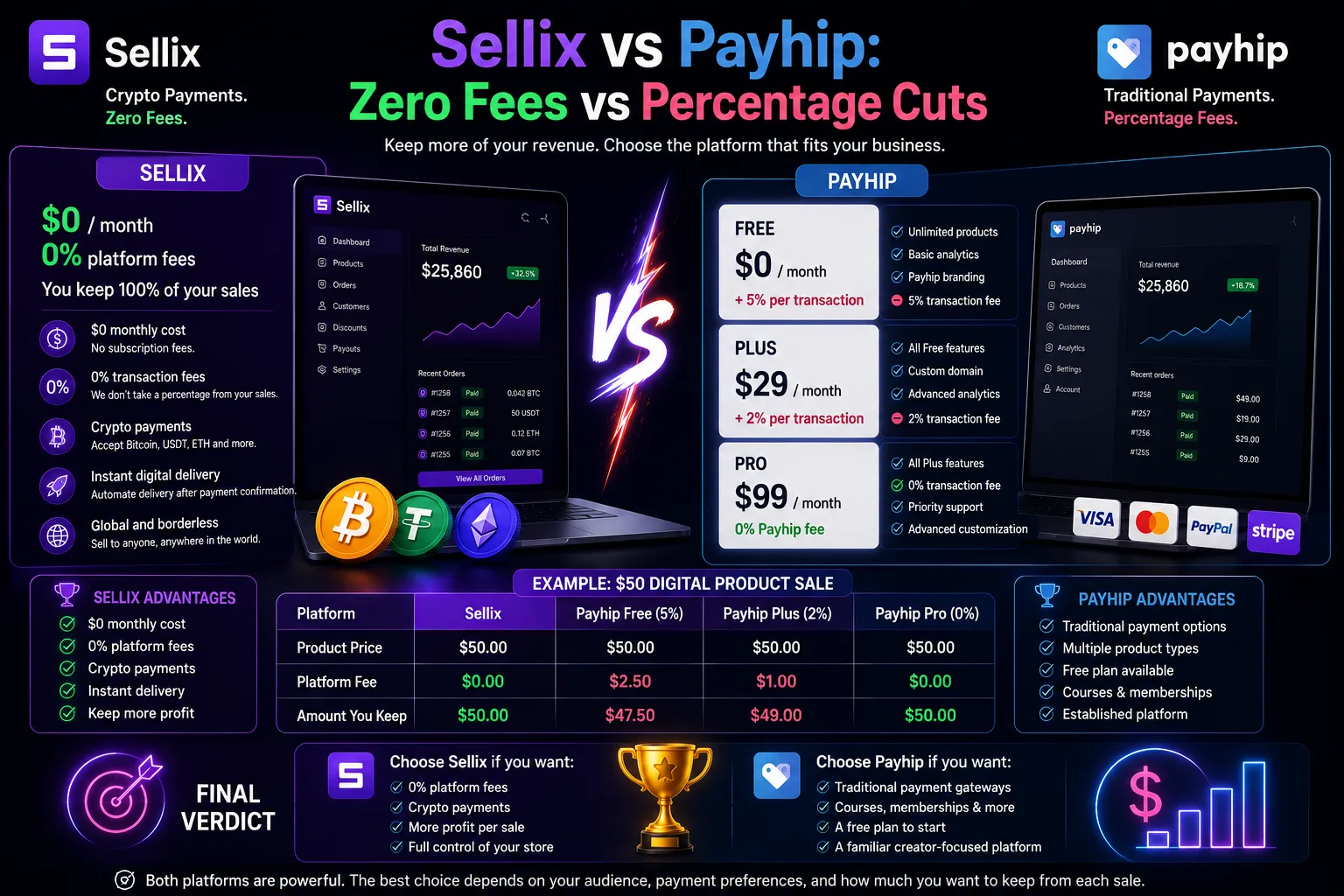
Feature Sellix Payhip Monthly fee$0 per monthFree plan: $0 per monthPlatform transaction fee0%Free plan: 5%Lower-fee paid planNo paid plan required for 0% platform feesPlus: $29 per month + 2% transaction feeNo-fee paid plan$0 per month + 0% platform transaction feesPro: $99 per month + 0% Payhip transaction feeMain payment focusCrypto paymentsTraditional payment gatewaysBest forCrypto-first digital sellers who want to keep more per saleCreators who want traditional checkout options and flexible product typesHow Much Does Sellix Cost?
Sellix is built for sellers who want to accept crypto payments for digital products, software, subscriptions, templates, files, license keys, and online services.
Sellix charges $0 per month and 0% platform transaction fees. This means Sellix does not take a percentage from each completed sale.
For a digital seller, this can make pricing easier. You know that the amount you charge for a product stays with your business instead of losing a percentage to the selling platform.
Sellers should still understand that crypto transactions can involve blockchain network fees. These are network-related costs and are different from platform fees charged by a store provider.
How Much Does Payhip Cost?
Payhip uses a plan-based pricing model. Its free plan has no monthly subscription cost, but Payhip takes a percentage from each sale.
On the Payhip Free plan, sellers pay 5% per transaction. The Plus plan costs $29 per month and lowers the Payhip transaction fee to 2%. The Pro plan costs $99 per month and removes Payhip's transaction fee.
Sellers should also remember that external payment processors may charge their own fees. These costs are separate from Payhip's platform transaction fees.
Why Percentage Fees Matter
A 5% fee may not seem large on a single low-cost sale. However, it becomes more noticeable as your monthly sales volume increases.
For example, if your store sells $1,000 worth of digital products through a plan with a 5% transaction fee, $50 goes to the platform. At $10,000 in sales, that same percentage would equal $500.
A platform with 0% transaction fees can be especially useful for sellers with regular sales volume, higher-priced products, bundles, subscriptions, or affiliate commissions.
Example: A $50 Digital Product Sale
Here is a simple example of how platform fees can affect a $50 sale before other business costs.
Platform Product Price Platform Fee Amount Kept Before Other Costs Sellix$50.00$0.00$50.00Payhip Free$50.00$2.50$47.50Payhip Plus$50.00$1.00$49.00Payhip Pro$50.00$0.00$50.00Sellix lets the seller keep the full $50 before any applicable blockchain network fees or business expenses. Payhip Free takes $2.50 from the same sale, while Payhip Plus takes $1.00.
Payhip Pro removes the Payhip transaction fee, but requires a $99 monthly subscription. This means the plan may make more sense for sellers with enough sales volume to justify the monthly cost.
When Does a Paid Payhip Plan Make Sense?
A paid Payhip plan may make sense when your transaction-fee savings are greater than the cost of the monthly subscription.
For example, the Payhip Plus plan costs $29 per month and reduces the fee from 5% to 2%. That means the plan becomes more attractive once your monthly sales volume is high enough that saving 3% per sale is worth more than the monthly subscription cost.
The Pro plan removes the Payhip transaction fee but costs $99 per month. Sellers should compare their expected monthly revenue with the amount they would otherwise pay through percentage-based fees.
Sellix vs Payhip for Digital Products
Sellix for Digital Products
Sellix is designed around digital commerce and crypto payments. Sellers can create product pages, accept cryptocurrency, manage orders, and automate delivery for products such as files, software keys, subscriptions, access passes, templates, and online services.
It is especially useful for sellers who want a crypto-first checkout flow, instant digital delivery, and no platform transaction fees.
Payhip for Digital Products
Payhip supports digital downloads and other creator-focused products. It also offers tools for products such as courses, memberships, coaching services, and physical products.
This can make Payhip a useful option for creators who want to accept traditional payment methods through supported payment gateways and sell different types of products through one storefront.
Sellix vs Payhip for Payments
The biggest difference is the payment focus.
Sellix is made for crypto payments. This can be a strong fit for sellers with a global crypto audience who want customers to pay with supported cryptocurrencies.
Payhip works with traditional payment gateways, allowing sellers to accept card payments, PayPal, and other available payment options through supported providers.
The better choice depends on your customers. A crypto-focused audience may prefer Sellix, while a general creator audience may prefer traditional checkout options.
Who Should Choose Sellix?
Sellix may be the stronger option for sellers who:
- Want to accept crypto payments
- Sell software, templates, license keys, files, subscriptions, or online services
- Want to pay $0 per month
- Want 0% platform transaction fees
- Need automatic digital delivery after payment confirmation
- Bring their own traffic through SEO, social media, communities, affiliates, or a custom domain
- Want to keep more revenue from each sale
Who Should Choose Payhip?
Payhip may be the stronger option for sellers who:
- Want traditional payment gateway support
- Sell courses, coaching, memberships, or physical products alongside digital products
- Prefer a plan that starts free and scales with sales volume
- Want a creator-oriented storefront with multiple product types
- Are comfortable paying percentage-based platform fees or a monthly subscription
- Need payment options based on their local market or payment provider availability
Final Verdict: Sellix or Payhip?
When comparing platform pricing, Sellix has the simpler and lower-cost structure. Sellix costs $0 per month and charges 0% platform transaction fees, allowing crypto-first sellers to keep more from each sale.
Payhip starts at $0 per month, but its Free plan takes 5% from every transaction. Sellers can reduce that fee to 2% with the $29 Plus plan or remove it with the $99 Pro plan.
For digital sellers who want crypto payments, automatic delivery, and no platform percentage cuts, Sellix is likely the more cost-efficient option. Payhip may be a better fit for sellers who need traditional payment gateways, broader product types, or creator-focused selling tools.