Sellpass Shut Down? Sellix.io Shut Down? Where to Sell Digital Products Now
Confused about Sellpass and Sellix.io? This guide explains the current situation, what sellers should do when a platform becomes unavailable, and where to sell digital products with crypto payments now.

Sellpass Shut Down? Sellix.io Shut Down? Where to Sell Digital Products Now
When a digital selling platform becomes unavailable, changes its service, or faces technical issues, sellers can quickly lose access to their storefront, payments, products, and customers. This is why many sellers are asking questions such as: Is Sellpass shut down? Is Sellix.io shut down? And where can I sell digital products now?
The short answer is that sellers should never depend on only one platform. Whether a service is fully offline, changing direction, or simply no longer suitable for your business, it is important to have a reliable backup plan for your products, orders, payment setup, and customers.
Is Sellpass Shut Down?
Sellpass should not automatically be treated as shut down just because users are looking for alternatives. Online platforms can change features, pricing, payment options, regions, or account requirements over time.
Before moving away from any platform, sellers should check the official website, dashboard notices, support channels, and recent announcements. A platform may still be operating even if certain features, payment methods, or account types are no longer available.
What Happened to Sellix.io?
Sellix.io became unavailable after its domain was affected by a law-enforcement operation. This created uncertainty for sellers who relied on the platform for digital storefronts, payment processing, product delivery, and customer management.
For sellers, situations like this are a reminder that an online business should not rely entirely on one domain, one payment provider, or one hosted platform. Your products, customer records, and business operations should always be protected with backups and alternative options.
Why Platform Shutdowns Matter for Digital Sellers
Digital businesses move fast. A seller may depend on one platform to host products, collect payments, send license keys, deliver downloads, manage subscriptions, and answer customer support requests.
If that platform becomes unavailable, the seller may suddenly have a problem with sales, fulfilment, customer communication, and access to historical order data.
This is especially important for sellers who offer products such as:
- Software licenses
- Digital downloads
- Templates
- Online tools
- Subscription access
- Memberships
- License keys
- Digital services
What Should You Do If Your Selling Platform Goes Offline?
If your current platform becomes unavailable, do not panic. Focus first on securing your business assets and giving your customers clear information.
1. Back Up Your Products
Keep copies of all digital files, license keys, templates, product descriptions, images, and download links outside of the platform you use. Never keep your only copy inside a hosted seller dashboard.
2. Save Order Information
Export order records whenever possible. This can include order IDs, product names, customer contact details, payment status, delivery status, and support history.
3. Keep Your Own Domain
Your business should use a domain that you control. If you only share a platform-hosted store URL, you may lose your public sales link when the platform changes or becomes unavailable.
4. Tell Customers What Is Happening
If there is a disruption, update customers through your website, social channels, community server, email list, or support page. Clear communication helps protect trust and reduces unnecessary support requests.
5. Move to a New Storefront Quickly
Once your products and data are secure, move your catalog to a new platform. The goal is to restore your checkout flow and automatic delivery as quickly as possible.
Where Can You Sell Digital Products Now?
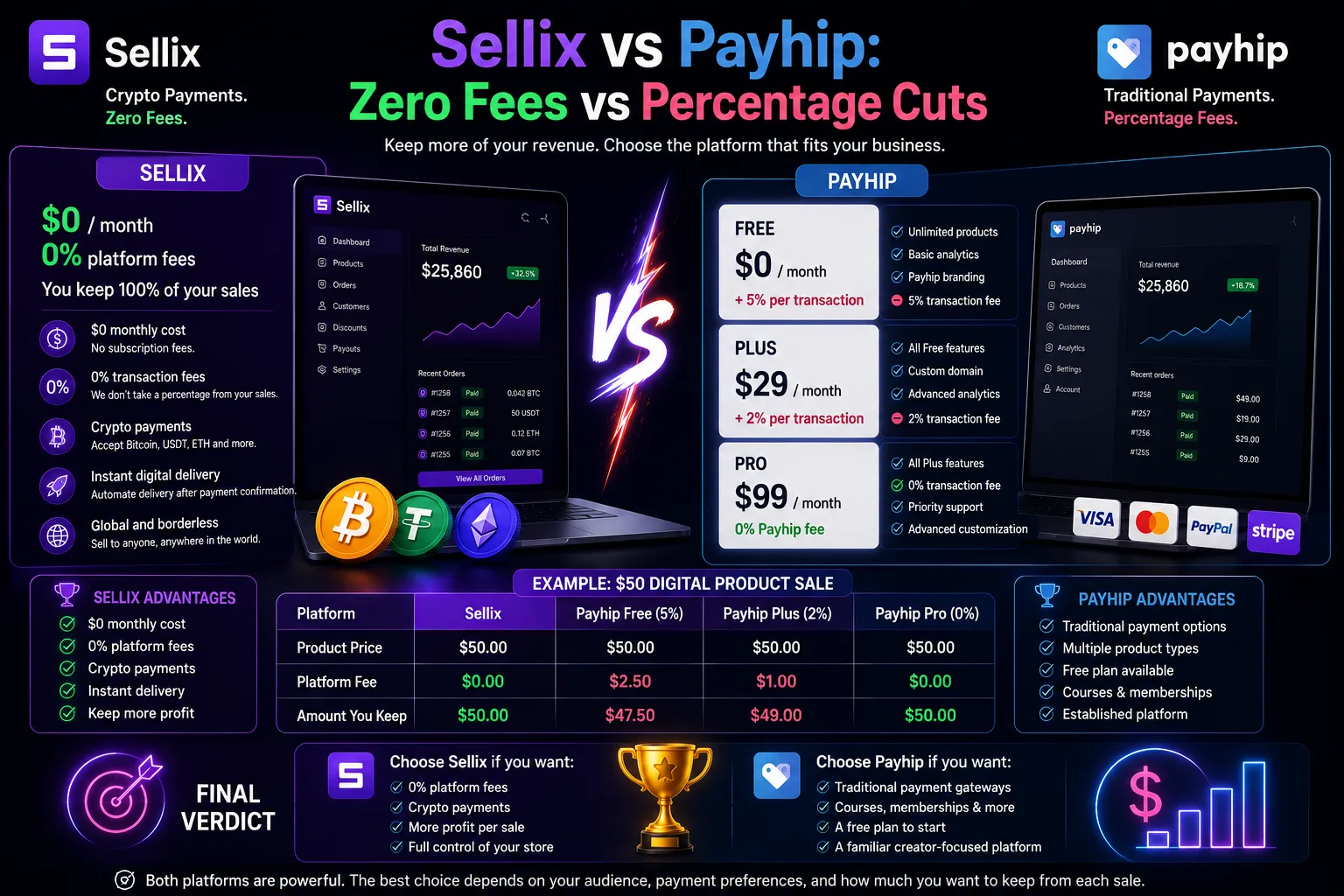
The right platform depends on what you sell, how you want to receive payments, and how much control you need over your business.
Sellers should look for a platform that offers a clear product setup, reliable checkout, automated digital delivery, customer management, and payment options that match their audience.
What to Look for in a New Selling Platform
Crypto Payment Support
If your customers use cryptocurrency, choose a platform that supports crypto payments and makes the checkout process easy to understand. Customers should be able to select a supported cryptocurrency, complete payment from their wallet, and receive confirmation when the transaction is successful.
Automatic Delivery
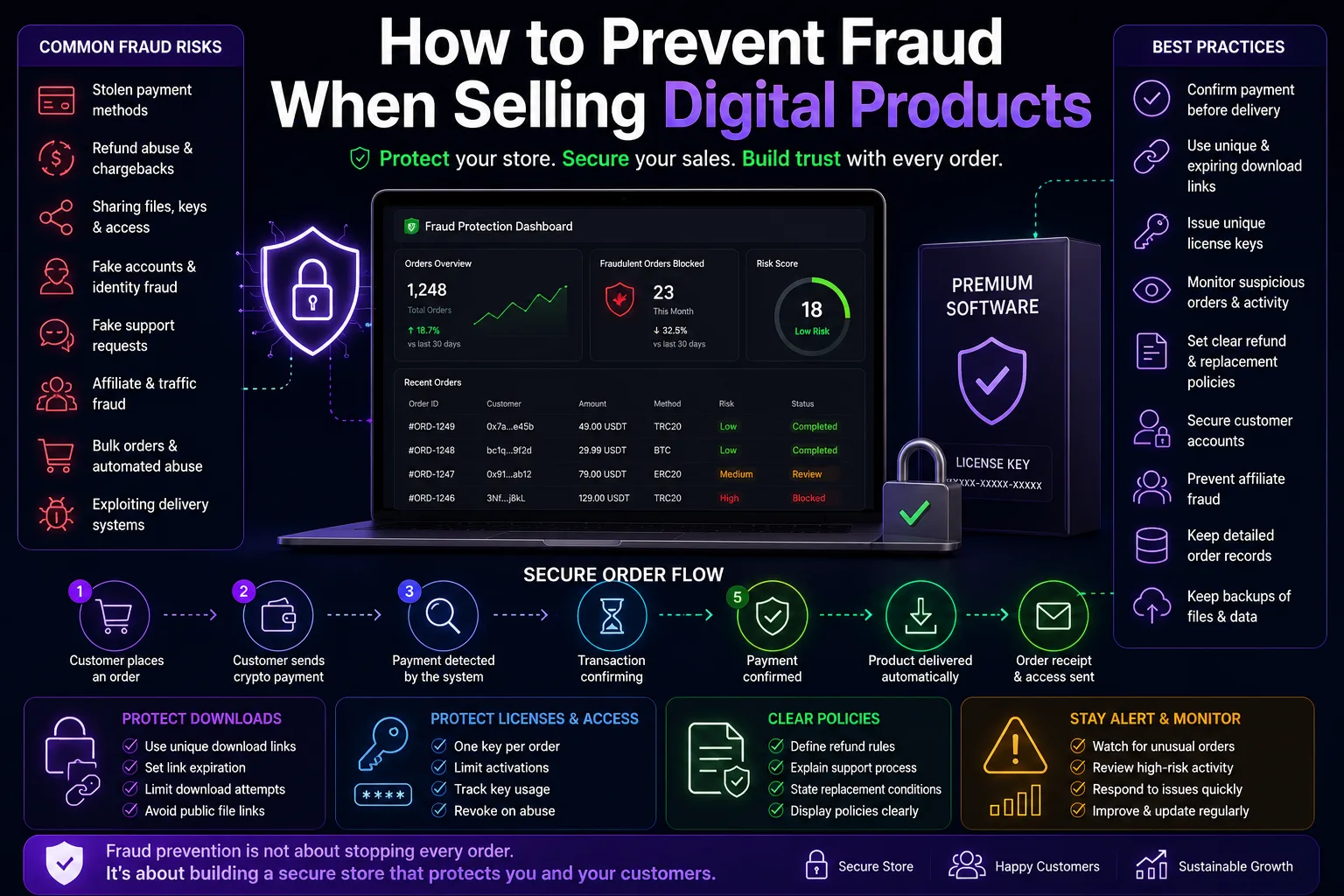
Automatic delivery is essential for digital products. After payment confirmation, the system should be able to send files, license keys, download links, access information, or subscription details without requiring manual work from the seller.
Storefront Customization
A professional storefront helps customers understand what you sell and why they should buy from you. Look for product pages, branding options, custom domains, and a checkout flow that works well on both desktop and mobile devices.
Order and Customer Management
Your platform should make it easy to view orders, track payment status, manage customers, and handle support requests. This becomes especially important as your store starts receiving more sales.
Reliable Business Backups
Even with a reliable platform, you should always keep your own backups. Save product files, customer communication, order exports, website content, and important business documents in a secure location.
Why Crypto-Focused Stores Are Growing
Many digital sellers are moving toward crypto-focused checkout systems because they want to sell to customers worldwide and offer an alternative to traditional payment methods.
Crypto payments can work especially well for digital products because orders can be confirmed online and delivered automatically after payment. A customer can pay from a crypto wallet, and the seller can fulfil the order without shipping physical goods.
How to Move Your Digital Store to a New Platform
Moving stores does not need to be complicated. Start with your most important products first, then rebuild the rest of your catalog over time.
- Export or save your product information.
- Back up your files, license keys, and delivery content.
- Create your new seller account.
- Add your products and prices.
- Set up crypto payment options.
- Configure automatic delivery.
- Connect your custom domain.
- Test the complete checkout process before announcing the new store.
Do Not Depend on Only One Platform
The biggest lesson for digital sellers is simple: your business should be portable. You should be able to move your products, customers, branding, and sales process if a provider changes, restricts an account, or becomes unavailable.
A good selling platform can make your business easier to run, but it should not become the only place where your business exists. Keep control of your domain, your product files, your customer communication, and your order records.
Final Thoughts
Questions about Sellpass, Sellix.io, and other selling platforms show why digital sellers need a stable and flexible setup. If one platform becomes unavailable, you should be able to keep selling without losing your entire business.
The best approach is to use a platform with crypto payment support, automatic delivery, a professional storefront, and strong order management — while keeping your own backups and maintaining control over your brand.