Sellix vs Shopify: Which Is the Best Platform for Digital Products?
Sellix and Shopify both help businesses sell online, but they are built for different types of sellers. This comparison explains the differences in crypto payments, digital delivery, store setup, customization, and which platform may fit your business best.
Sellix vs Shopify: Which Is the Best Platform for Digital Products?
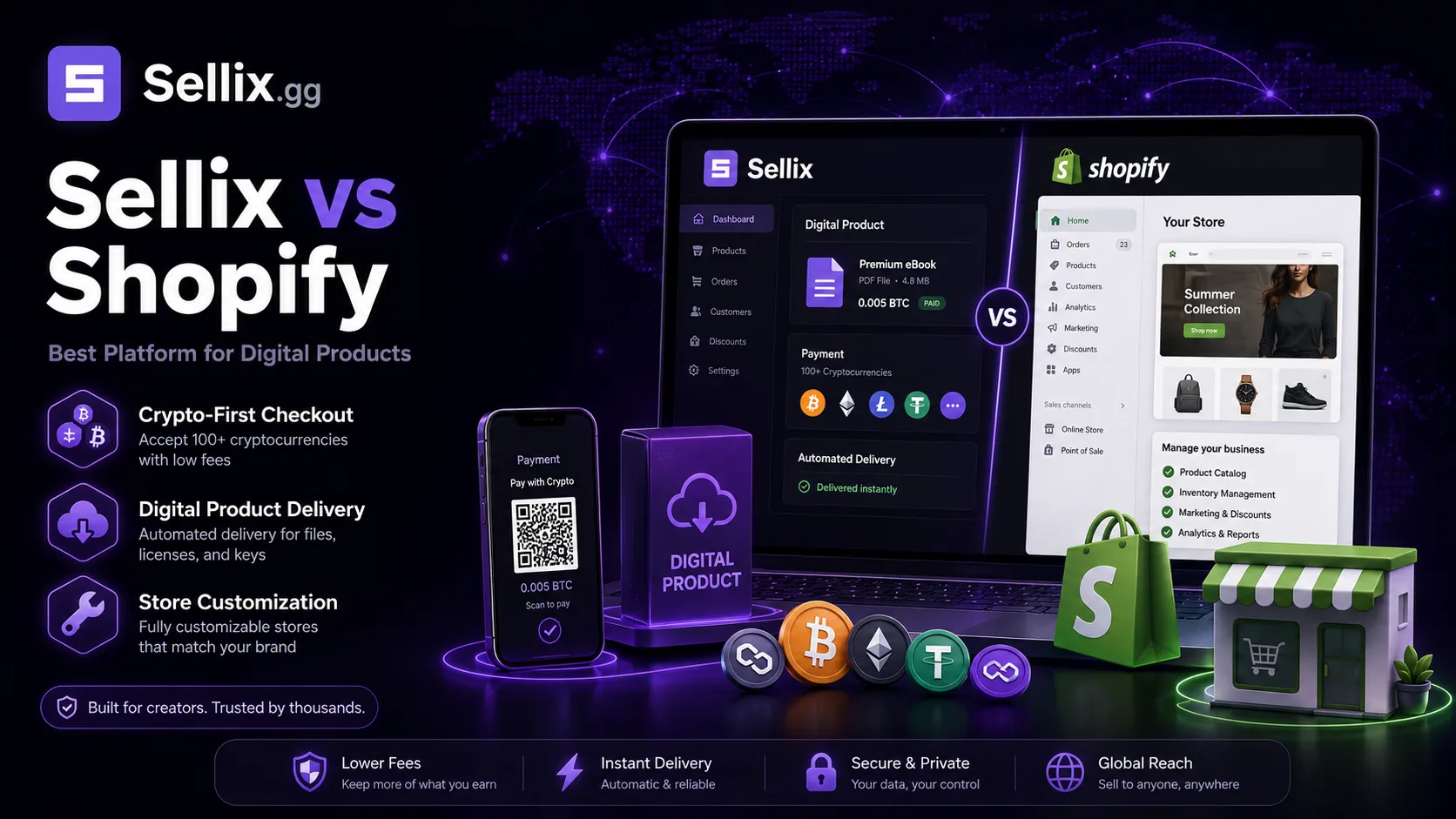
Sellix and Shopify are both platforms that help businesses sell online, but they are designed for different types of sellers. Shopify is a broad e-commerce platform built for physical products, brands, subscriptions, and online stores. Sellix is focused on digital products, crypto payments, storefronts, and automated delivery.
If you are selling files, software licenses, subscriptions, templates, access keys, digital services, or other online products, choosing the right platform can affect how quickly you can launch, how your customers pay, and how much manual work is required after every order.
Sellix vs Shopify: Quick Overview
Feature Sellix Shopify Main focusDigital products and crypto commerceGeneral e-commerce for physical and digital productsCrypto paymentsBuilt around crypto payment supportAvailable through supported payment options and regional availabilityDigital deliveryBuilt for automatic digital deliveryOften requires a digital download app or extra setupPhysical productsNot the main focusStrong support for shipping, inventory, and fulfilmentStore setupFast setup for digital sellersMore flexible, but can require more configurationBest forCrypto-first digital sellersBrands selling physical, digital, or mixed productsWhat Is Sellix?
Sellix is an e-commerce platform focused on helping sellers launch stores for digital products and accept cryptocurrency payments. Sellers can create product pages, sell access-based products, manage orders, and automate delivery after a successful payment.
The platform is especially suited to sellers who want a crypto-first checkout experience. This can be useful for software sellers, digital creators, online communities, subscription businesses, template stores, and sellers who serve international customers.
What Is Shopify?
Shopify is a general e-commerce platform used by businesses of many sizes. It is designed for selling physical goods, digital products, subscriptions, services, and more through a branded online store.
Shopify is especially strong for businesses that need product inventory, shipping settings, fulfilment workflows, physical product variants, marketing integrations, and a large app ecosystem.
Shopify can also support digital goods, but sellers often use a digital delivery app to send files, manage download limits, or automate post-purchase access.
Sellix vs Shopify for Crypto Payments
Crypto payments are one of the biggest differences between the two platforms.
Sellix is designed around crypto commerce. It is intended for sellers who want customers to pay with cryptocurrency and who want crypto payments to be a central part of their checkout flow.
Shopify can support cryptocurrency payments in certain regions and through supported payment methods, but crypto is not the main focus of the platform. Availability can depend on your country, payment provider, and Shopify setup.
For a seller whose business is built primarily around crypto payments, a crypto-focused platform can be more direct and easier to configure. For a seller who wants cards, bank payments, shipping, and a traditional retail checkout, Shopify may be a better match.
Sellix vs Shopify for Digital Products
Both platforms can be used to sell digital products, but the setup is different.
Sellix for Digital Products
Sellix is built with digital delivery in mind. Sellers can create products such as files, license keys, subscriptions, access codes, downloadable resources, and online services. After a confirmed payment, the order can be delivered automatically.
This makes Sellix useful for sellers who want to reduce manual work and launch digital products quickly.
Shopify for Digital Products
Shopify can also sell digital products, including e-books, files, software, music, templates, and downloadable content. However, digital delivery is commonly handled through Shopify apps that add features such as download links, delivery emails, access control, and download limits.
This gives Shopify sellers flexibility, but it can also mean more setup, more apps, and more moving parts compared with a platform that is focused on digital products from the start.
Sellix vs Shopify for Physical Products
Shopify is the stronger option for physical products. It includes tools for inventory, shipping rates, fulfilment, product variants, warehouse workflows, and integrations with shipping services.
Sellix is better suited to digital commerce. If your main business involves shipping products, handling stock, or managing complex product variants, Shopify is likely the more suitable platform.
Store Design and Customization
Shopify offers a large ecosystem of themes, apps, and customization tools. This is useful for brands that want a highly customized storefront, advanced marketing pages, content-heavy websites, and a broader e-commerce setup.
Sellix focuses more on fast store creation for digital sellers. It provides storefront tools that help sellers launch without building a complete e-commerce website from scratch.
The best choice depends on your goal. Shopify gives more room for extensive store customization, while Sellix can be faster for a simple crypto-first digital product store.
Which Platform Is Easier to Set Up?
For a simple digital product store with crypto payments, Sellix can be easier to set up. Sellers can create products, configure delivery, and launch a checkout flow without needing to build a large store.
Shopify can take more time because sellers may need to choose a theme, configure payments, install apps, add digital delivery tools, set up tax settings, and customize their checkout experience.
However, that additional setup can be worth it for larger brands or stores that need physical product features, marketing tools, and a more complex website structure.
Who Should Use Sellix?
Sellix may be a good choice for sellers who:
- Sell digital products only or mainly digital products
- Want to accept cryptocurrency payments
- Need automatic delivery for files, access keys, or subscriptions
- Want to launch a store quickly
- Sell software, templates, digital tools, or online services
- Serve a global crypto-focused audience
Who Should Use Shopify?
Shopify may be a good choice for sellers who:
- Sell physical products or a mix of physical and digital products
- Need inventory and shipping tools
- Want a highly customizable store design
- Need access to a large app marketplace
- Want a traditional retail checkout experience
- Plan to build a full e-commerce brand website
Final Verdict: Sellix or Shopify?
Sellix and Shopify are not direct replacements for every seller because they serve different needs.
Sellix is a strong option for crypto-first digital sellers who want fast setup, automatic delivery, and a store built around digital products and cryptocurrency payments.
Shopify is a strong option for businesses that need physical product support, shipping tools, advanced storefront customization, and a larger e-commerce ecosystem.
For digital products sold primarily through crypto payments, Sellix is usually the more focused choice. For a larger retail brand or a business selling physical products alongside digital goods, Shopify may offer more flexibility.