How to Sell Digital Products in 2026: Complete Guide
Learn how to sell digital products in 2026, from choosing a product and building a storefront to accepting crypto payments and delivering orders automatically. This complete guide covers the key steps for launching and growing a digital product business.

How to Sell Digital Products in 2026: Complete Guide
Selling digital products is one of the simplest ways to start an online business in 2026. Unlike physical products, digital goods do not need warehouses, shipping labels, or stock management. A customer can pay online and receive their product within minutes.
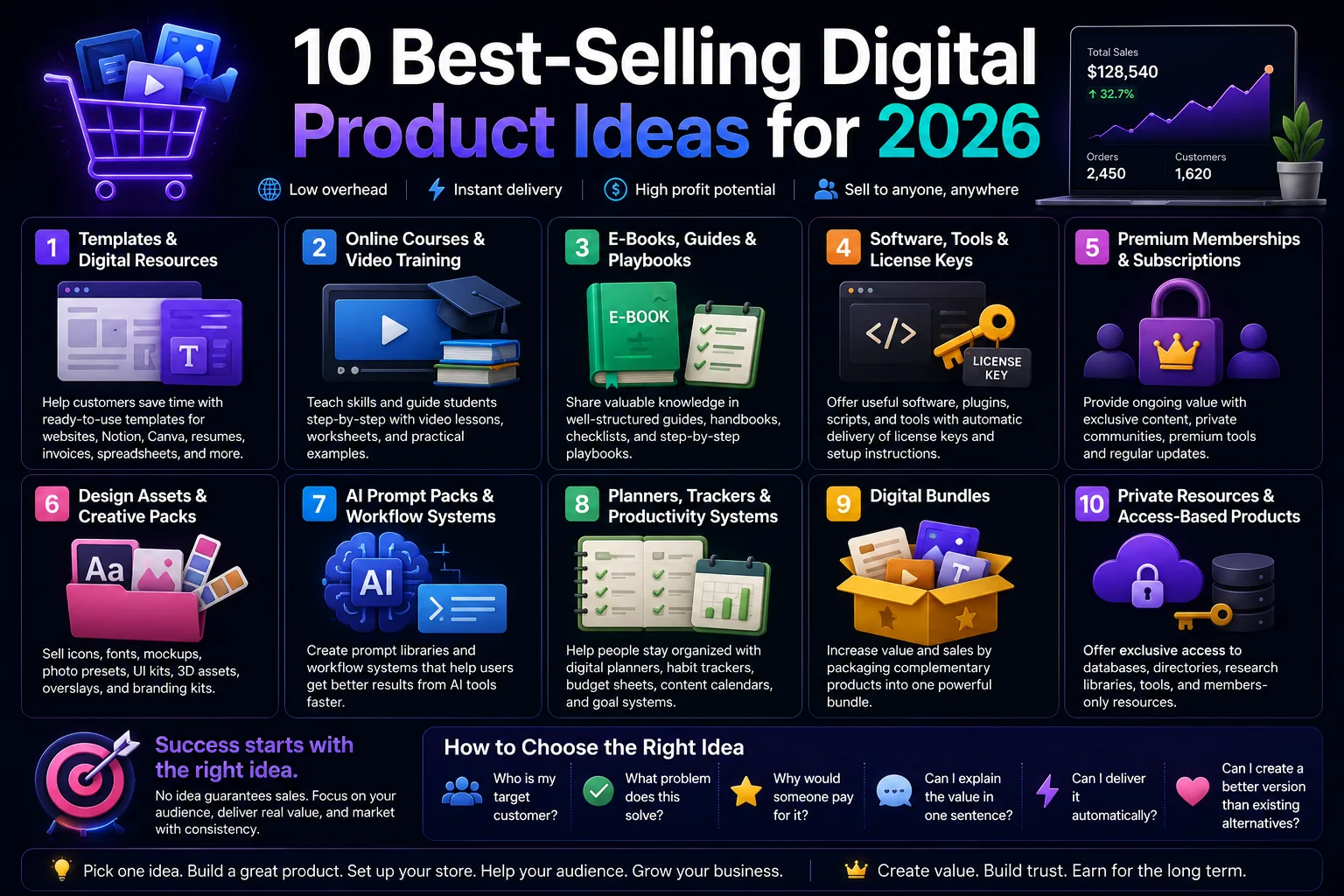
Digital products can include software licenses, templates, e-books, private resources, subscriptions, downloads, access keys, online tools, and digital services. With the right setup, sellers can create a product once and sell it repeatedly to customers around the world.
This guide explains how to choose a product, build a storefront, accept crypto payments, automate delivery, and grow a digital product business in 2026.
What Are Digital Products?
Digital products are products delivered online instead of through physical shipping. They can be downloaded, accessed through an account, sent by email, or unlocked after payment.
Common examples include:
- Software licenses and activation keys
- E-books and digital guides
- Design templates and creative assets
- Downloadable files and resource packs
- Online courses and premium content
- Subscriptions and memberships
- Private communities and access passes
- Digital tools and SaaS products
- Freelance services and digital deliverables
Why Sell Digital Products?
Digital products are attractive because they are scalable. You can create a file, tool, template, guide, or product once and sell it to multiple customers without producing or shipping a new physical item each time.
They are also flexible. A digital seller can work with customers globally, offer instant delivery, create multiple price points, and run a store without managing physical inventory.
Step 1: Choose the Right Digital Product
The first step is choosing something people are willing to buy. A strong digital product usually helps customers save time, solve a problem, learn something, gain access, or improve their work.
Before creating your product, ask yourself:
- Who is this product for?
- What problem does it solve?
- Why would someone pay for it?
- What makes it different from free alternatives?
- How will the customer receive and use it?
Start with one clear product rather than trying to sell too many things at once. A simple and useful product is often easier to market than a large catalog with no clear focus.
Step 2: Create a Product That Is Easy to Understand
Customers should quickly understand what they are buying. Your product title, description, preview, price, and delivery details should all be clear before checkout.
A good digital product page should answer the following questions:
- What is the product?
- Who is it made for?
- What does the customer receive?
- How quickly is it delivered?
- What payment methods are available?
- Where can customers get support?
Avoid vague descriptions. Instead of saying "premium digital resource," explain exactly what the buyer receives, such as a ZIP file, a license key, a downloadable template pack, or access to a private tool.
Step 3: Set Up Your Online Store
Your store is where customers discover products, review product details, complete payment, and receive their purchase. In 2026, a good digital storefront should be fast, mobile-friendly, and simple to use.
Your store should include:
- A recognizable brand name and logo
- Clear product pages
- Simple navigation
- Product prices and delivery details
- A support or contact method
- Terms, refund information, and policies
It is also smart to use a domain you control. Your storefront platform can change over time, but your own domain gives you more control over your brand and where customers find you.
Step 4: Accept Crypto Payments
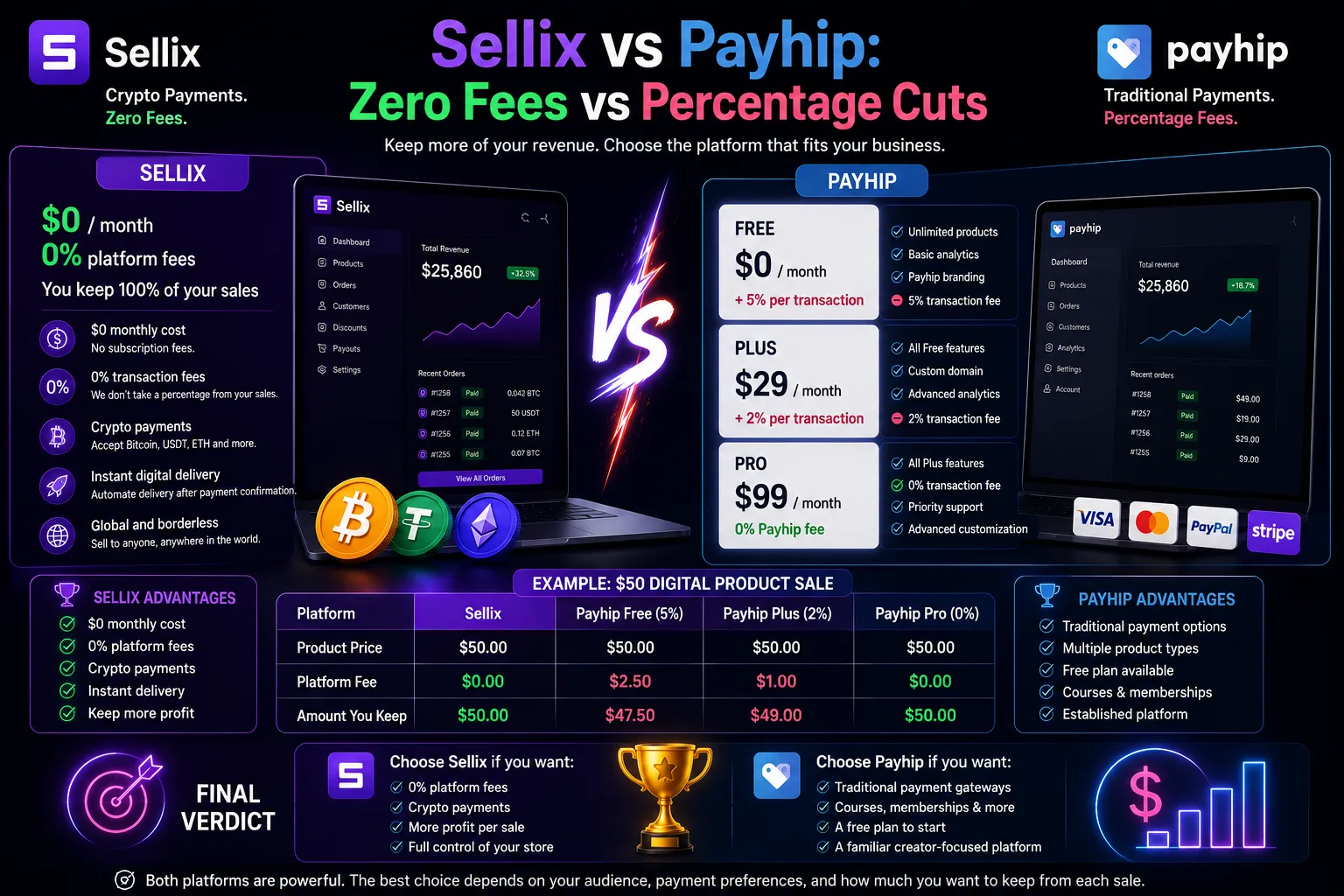
Crypto payments can help digital sellers accept payments from customers worldwide. Instead of using traditional card payments or bank transfers, customers can pay with supported cryptocurrencies from their wallet.
This can be useful for sellers offering software, digital downloads, online services, subscriptions, templates, and access-based products. Customers can complete a payment through a crypto checkout, and the order can move forward after the transaction is confirmed.
A crypto-focused payment setup should make the process clear for customers. The checkout should show the amount to pay, the selected cryptocurrency, the payment address or QR code, and the status of the transaction.
Step 5: Automate Product Delivery
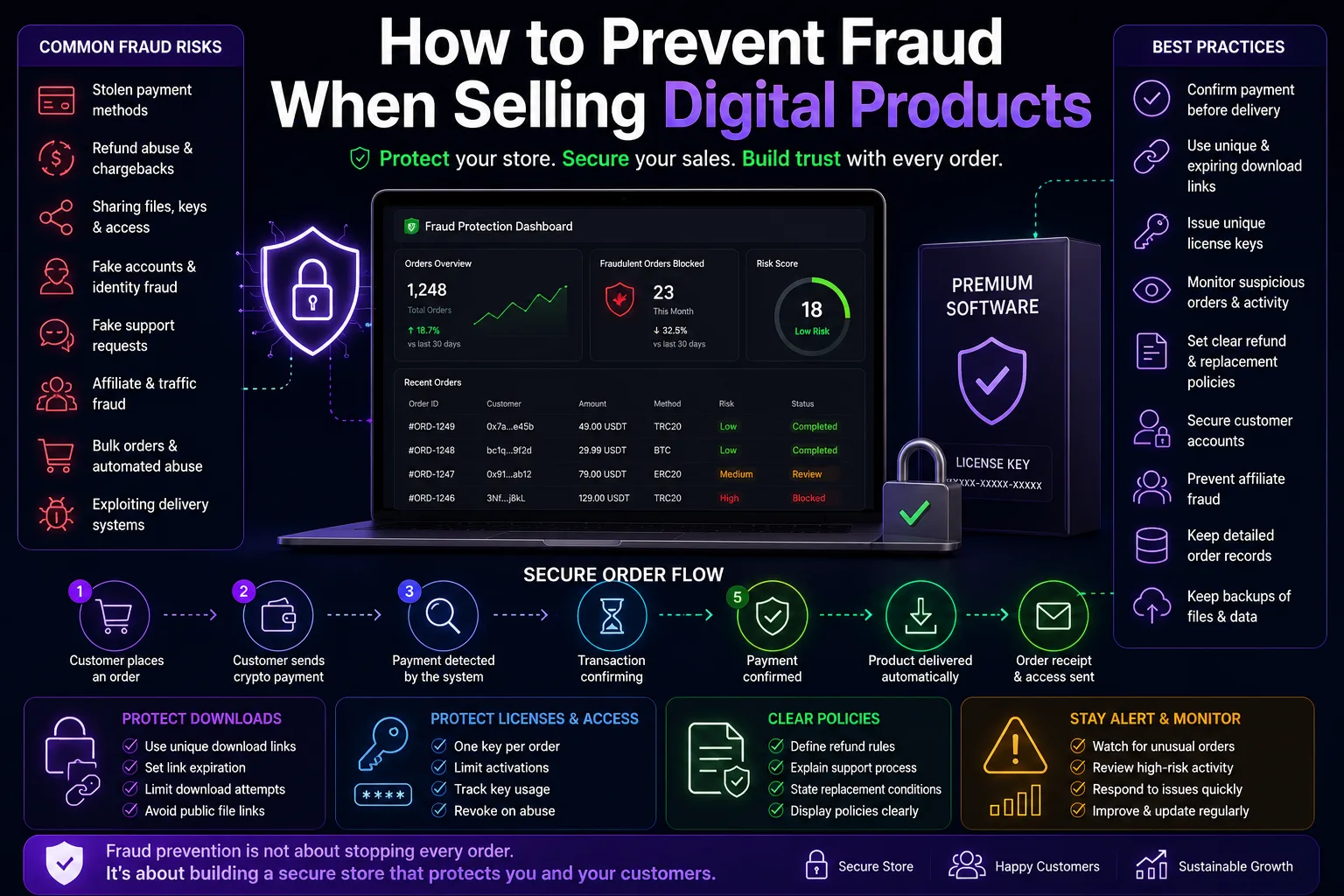
Automatic delivery is one of the biggest advantages of selling digital products. Once payment is confirmed, customers can instantly receive the product without the seller having to manually send every order.
Depending on the product, automatic delivery can include:
- Download links
- License keys
- Access credentials
- Membership activation
- Private community invitations
- Instructions or onboarding emails
Automation saves time, improves the customer experience, and makes it easier to scale as order volume grows.
Step 6: Set the Right Price
Pricing depends on the value your product provides. A digital product that saves customers hours of work or gives them useful access can often justify a higher price than a simple file with limited value.
Consider offering different options, such as:
- A basic version for new customers
- A premium version with additional features
- Bundles with multiple products
- Subscription plans for ongoing access
- Limited-time launch offers
Keep your pricing simple. Customers should be able to understand the difference between each option without reading a long comparison page.
Step 7: Build Trust Before Customers Buy
Customers are more likely to buy when they understand who they are buying from and what they will receive. A professional-looking store, clear product descriptions, visible support information, and honest policies can make a major difference.
You can also build trust by showing product previews, screenshots, examples, customer feedback where permitted, and clear information about delivery.
Step 8: Market Your Digital Products
Creating the product is only one part of the process. You also need a way for people to find your store. In 2026, many digital sellers use a mix of organic content, search traffic, communities, partnerships, and direct outreach.
Common marketing channels include:
- Search engine optimization and blog content
- Social media posts and short-form video
- Online communities and niche forums
- Email newsletters
- Affiliate partnerships
- Creator collaborations
- Product comparison pages
- Referral programs
Focus on the platforms where your ideal customers already spend time. A product for developers may work well in technical communities, while design assets may perform better through visual content and creator platforms.
Step 9: Offer Good Customer Support
Even with automatic delivery, customers may have questions about payment confirmation, downloads, product setup, access, or refunds. Fast and clear customer support helps build trust and encourages repeat purchases.
Make it easy for customers to find help. You can provide a support email, ticket system, help center, documentation page, or community channel.
Step 10: Keep Backups of Your Business
Your online business should not depend entirely on one platform. Keep copies of your product files, license keys, product descriptions, customer communication, and order records in a secure location.
You should also keep control of your domain name and maintain access to your customer communication channels. If a platform changes its policies, experiences downtime, or becomes unavailable, you should still be able to continue operating your business.
Common Mistakes to Avoid
Many new sellers make the same mistakes when launching digital products. Avoiding these issues can save time and improve your store from the beginning.
- Creating a product without a clear target customer
- Using vague product descriptions
- Making checkout too complicated
- Manually delivering every order
- Ignoring customer support
- Depending on only one traffic source
- Keeping no backups of products or order data
- Using a store design that does not work well on mobile
Final Thoughts
Selling digital products in 2026 can be simple when you have the right setup. Choose a useful product, create a clear product page, accept crypto payments, automate delivery, and build trust with customers.
The best digital stores are not necessarily the most complicated. They make it easy for customers to understand the product, complete payment, and receive what they purchased. With a reliable storefront and a clear plan, digital products can become a scalable way to build an online business.