How to Price Your Digital Products for Maximum Profit
Learn how to price digital products based on value, customer demand, product positioning, and profit goals. This guide covers pricing models, bundles, subscriptions, discounts, and common mistakes to avoid.
How to Price Your Digital Products for Maximum Profit
Pricing is one of the most important decisions when selling digital products online. A great product can still struggle to sell if the price feels too high, confusing, or disconnected from the value customers receive.
At the same time, pricing your product too low can make it harder to grow your business. Low prices may attract more buyers, but they can also reduce profit, lower the perceived value of your product, and make customer support harder to manage as sales increase.
The goal is not simply to choose the highest or lowest price. The goal is to find a price that matches the value of your product, works for your target audience, and gives your business enough room to grow.
Why Pricing Matters for Digital Products
Digital products are different from physical products. You do not need to manufacture a new item or ship a package every time someone buys. This means your cost per sale can be much lower than with physical goods.
However, digital products still require time, knowledge, design, support, marketing, updates, payment processing, and platform costs. Your price should help cover those costs while also reflecting the value your customer receives.
A good price can help you:
- Increase profit per sale
- Attract the right type of customer
- Position your product as valuable and trustworthy
- Support future updates and customer service
- Create room for bundles, discounts, and affiliate offers
Start With the Value of Your Product
The best digital product pricing usually starts with value, not with how long it took you to create the product.
Customers do not only pay for a file, license key, template, guide, or subscription. They pay for the result it gives them. Your product may save them time, help them make money, reduce a problem, provide useful access, or make a difficult task easier.
Ask yourself these questions before choosing a price:
- What problem does my product solve?
- How much time does it save the customer?
- What result can the customer achieve with it?
- What would it cost the customer to solve this problem another way?
- Is the product useful once, or does it provide ongoing value?
A product that helps someone save hours of work or gain access to a valuable resource can often justify a higher price than a simple file with limited use.
Research Your Market Before Setting a Price
Before setting your price, look at similar products in your market. This does not mean copying your competitors exactly. It means understanding what customers are already used to paying.
Compare products based on:
- Features and product quality
- Target audience
- Delivery method
- Support and updates
- Brand reputation
- Whether the product includes commercial rights or personal-use rights
A beginner template may be priced differently from a premium template pack for agencies. A basic software license may cost less than a version with updates, support, extra features, or commercial use.
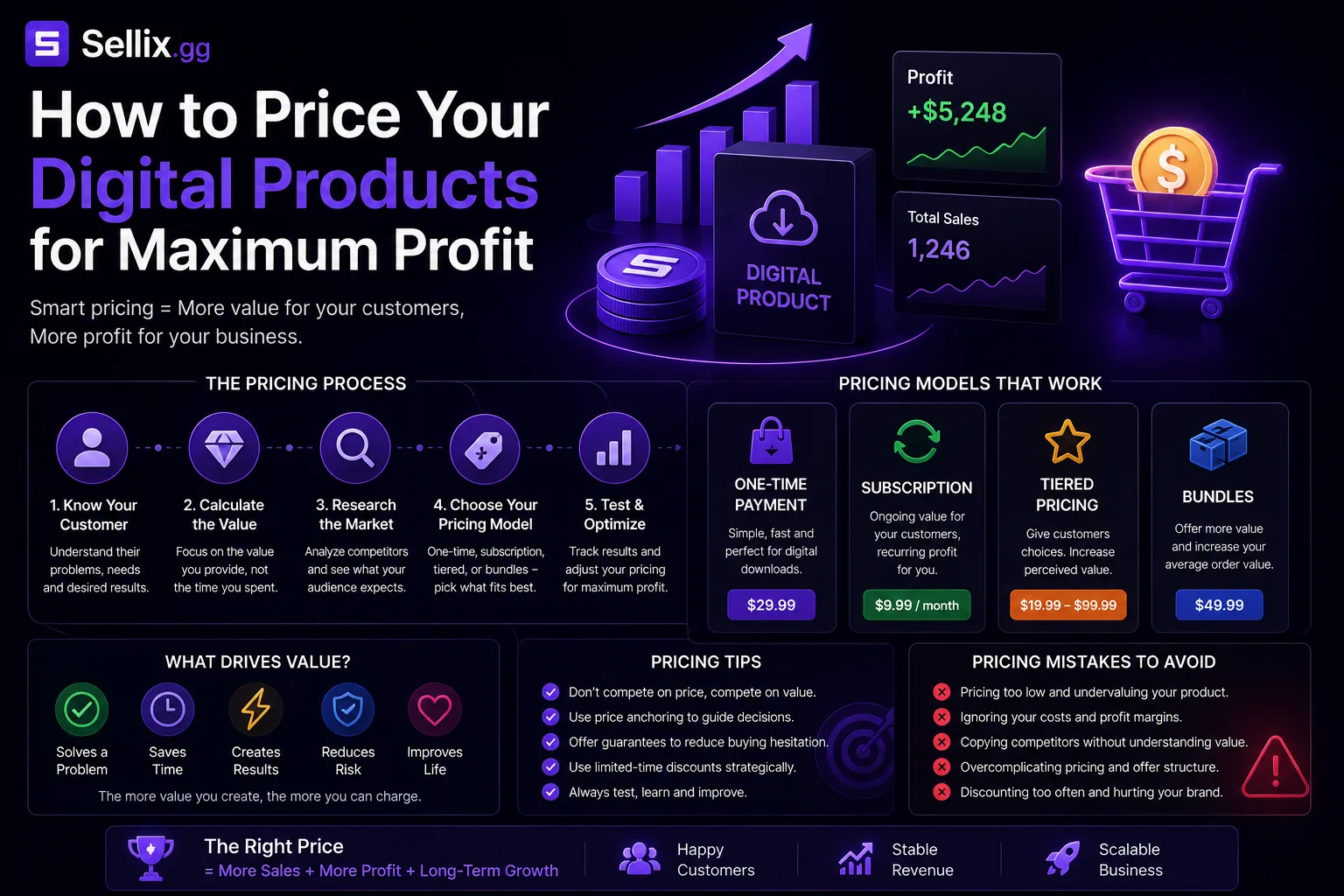
Choose the Right Pricing Model
There is no single pricing model that works for every digital product. The best option depends on whether your product is a one-time download, recurring service, subscription, tool, or access-based offer.
1. One-Time Payment
A one-time payment works well for digital downloads, templates, e-books, resource packs, guides, design assets, and software licenses.
The customer pays once and receives the product immediately. This is simple for both the seller and the buyer, especially when you use automatic delivery.
2. Subscription Pricing
Subscription pricing is useful when customers receive ongoing value. This can include software access, private communities, premium content, recurring updates, tools, memberships, or monthly resource packs.
A subscription creates recurring revenue, but it also means customers expect continued value. Make sure you can consistently provide updates, content, access, or support before offering a monthly plan.
3. Tiered Pricing
Tiered pricing gives customers multiple choices. Instead of offering only one version of your product, you can create a basic, premium, and business option.
For example:
- Basic: One product file or limited access
- Pro: Extra features, bonuses, or priority support
- Business: Commercial rights, team access, or advanced features
This gives customers more flexibility and helps you earn more from buyers who want additional value.
4. Bundle Pricing
Bundles combine several products into one offer. This can increase your average order value and make customers feel like they are getting more value.
For example, instead of selling three templates individually for $15 each, you could offer all three as a bundle for $35.
Bundles work best when the products are related and solve a larger problem together.
Use Price Anchoring Carefully
Price anchoring means showing customers a higher-value option next to a lower-priced option. This can make the lower-priced product feel more affordable or make the premium product feel more valuable.
For example, you might offer:
- Basic Plan: $19
- Pro Plan: $49
- Business Plan: $99
The middle option often becomes attractive because it looks like a balance between price and value. However, every plan should provide real value. Avoid creating fake pricing options just to force customers toward one product.
Do Not Price Too Low
Many new sellers make the mistake of pricing too low because they are afraid customers will not buy. While a low price can increase conversions in some cases, it can also create problems.
Very low pricing can:
- Make the product look less valuable
- Attract customers who expect unrealistic support
- Leave little room for promotions or affiliate commissions
- Make it harder to cover support, platform, and marketing costs
- Require a much larger number of sales to earn meaningful profit
A better approach is to price fairly, explain the value clearly, and improve your product page so buyers understand exactly what they receive.
Consider Your Costs and Profit Margin
Even digital products have costs. Before choosing a price, think about payment fees, platform costs, marketing expenses, affiliate commissions, customer support, product updates, and the time you spend maintaining the business.
A simple way to think about pricing is:
Profit per sale = Product price - fees - support costs - marketing costs
You do not need to calculate every cost perfectly at the beginning, but you should know whether your product is profitable after the main costs are considered.
Use Discounts Without Hurting Your Brand
Discounts can help increase sales, but using them too often can make customers wait for the next sale instead of buying at the normal price.
Use discounts for clear reasons, such as:
- A launch offer for a new product
- A limited-time seasonal promotion
- A bundle discount
- A reward for existing customers
- A discount code for a trusted affiliate or creator partnership
Keep the normal price realistic. A product should still feel worth buying even when there is no discount.
Test Your Pricing Over Time
You do not need to find the perfect price on the first day. Most successful sellers test and improve their pricing over time.
You can test changes such as:
- Raising or lowering the base price
- Adding a premium version
- Creating a bundle
- Changing the product description or product preview
- Offering a limited launch price
- Adding bonuses instead of reducing the price
Track your results carefully. Look at conversion rates, total revenue, support requests, refund requests, and repeat purchases. A lower-priced product may sell more units but generate less profit than a premium offer with fewer customers.
Common Digital Product Pricing Mistakes
Avoid these common mistakes when pricing your digital products:
- Copying a competitor's price without comparing value
- Pricing based only on how long it took to create the product
- Setting a low price without considering fees and support costs
- Using too many confusing pricing tiers
- Offering discounts all the time
- Failing to explain why the product is worth the price
- Ignoring feedback from real customers
- Never testing new price points or bundles
Final Thoughts
The best price for your digital product is one that reflects real customer value, fits your market, covers your business costs, and gives you room to grow.
Start with a clear offer, explain what customers receive, and avoid making your price too low just to get early sales. You can always test new price points, bundles, subscriptions, and premium versions as your store grows.
A profitable digital product business is not only about getting more sales. It is about building offers that customers understand, trust, and are happy to pay for.